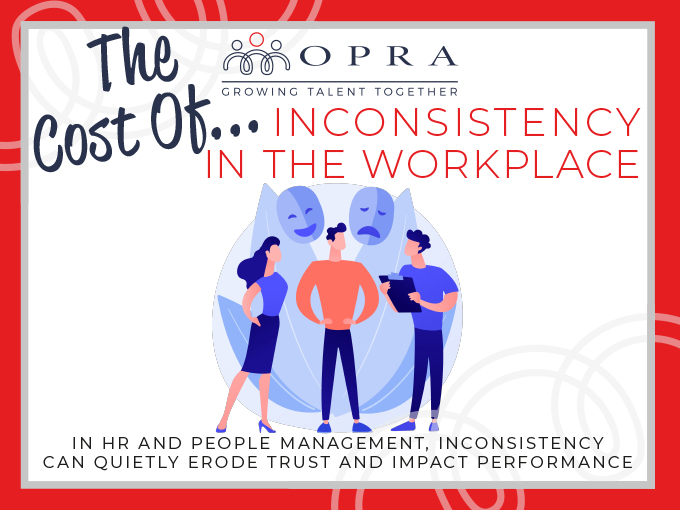
Consistency might not always be the most talked-about element of business success, but its absence is often one of the most damaging. In HR and people management, inconsistency can quietly erode trust, impact performance, and ultimately cost organisations far more than they realise.
Why Consistency Matters
At its core, consistency creates fairness, clarity, and stability. Employees need to understand what is expected of them, how decisions are made, and what they can rely on from their employer. When policies, behaviours, or leadership approaches vary too widely, it creates uncertainty—and uncertainty leads to disengagement.
Consistency doesn’t mean rigidity. It means applying principles, values, and processes in a fair and transparent way across the organisation.
The Hidden Costs
1. Loss of Trust
When employees see rules applied differently depending on the person or situation, trust quickly diminishes. Perceived favouritism or unpredictability can lead to frustration and resentment.
2. Reduced Employee Engagement
Inconsistent management styles or unclear expectations make it harder for employees to feel confident in their roles. Over time, this reduces motivation and productivity.
3. Increased Staff Turnover
Employees are more likely to leave organisations where they feel treated unfairly or where there is a lack of structure. High turnover brings additional costs in recruitment, onboarding, and lost knowledge.
4. Legal and Compliance Risks
Inconsistent application of policies—particularly around performance management, disciplinary action, or flexible working—can expose organisations to legal challenges.
5. Damage to Employer Brand
Word spreads quickly. Inconsistent employee experiences can impact how your organisation is perceived externally, making it harder to attract top talent.

Where Inconsistency Shows Up
• Different managers applying policies in different ways
• Variations in hiring processes or candidate experience
• Uneven onboarding or training programmes
• Lack of alignment in performance reviews
• Inconsistent communication from leadership
These issues are often unintentional but can have a significant cumulative impact.
How to Create Consistency
Define Clear Processes
Ensure policies and procedures are well-documented, accessible, and understood across the organisation.
Train Your Managers
Managers play a critical role in delivering consistency. Equip them with the tools and training to apply policies fairly and confidently.
Align Around Core Values
Consistency is easier to achieve when decisions are guided by shared organisational values.
Use Data and Feedback
Regularly review employee feedback and HR data to identify inconsistencies and address them proactively.
Communicate Clearly and Often
Transparency helps employees understand not just what decisions are made, but why.
The Balance to Strike
It’s important to recognise that consistency doesn’t mean treating everyone identically—it means treating people fairly. There will always be situations that require flexibility, but these decisions should still be grounded in clear principles.
In Conclusion
Inconsistency can be costly, but it’s also preventable. By putting structure, clarity, and fairness at the heart of your HR approach, organisations can build trust, improve retention, and create a more positive and productive workplace.
In a competitive market, consistency isn’t just a ‘nice to have’, it’s a business advantage.